
Post Views: 4
Art, Culture and the Power of Adornment
As an artist and photographer, I have always been drawn to how people communicate without speaking. Long before words are formed, the body already knows how to tell its story. Through posture, movement, texture, color, and adornment, we announce who we are, where we come from, and sometimes who we are becoming.
Adornment has always fascinated me because it sits quietly at the intersection of art and identity. Beads, fabric, scars, hairstyles, and jewellery are not decorative accidents. They are intentional choices layered with memory, meaning, and emotion. They speak when language fails. They whisper truths we are sometimes not ready to say out loud.
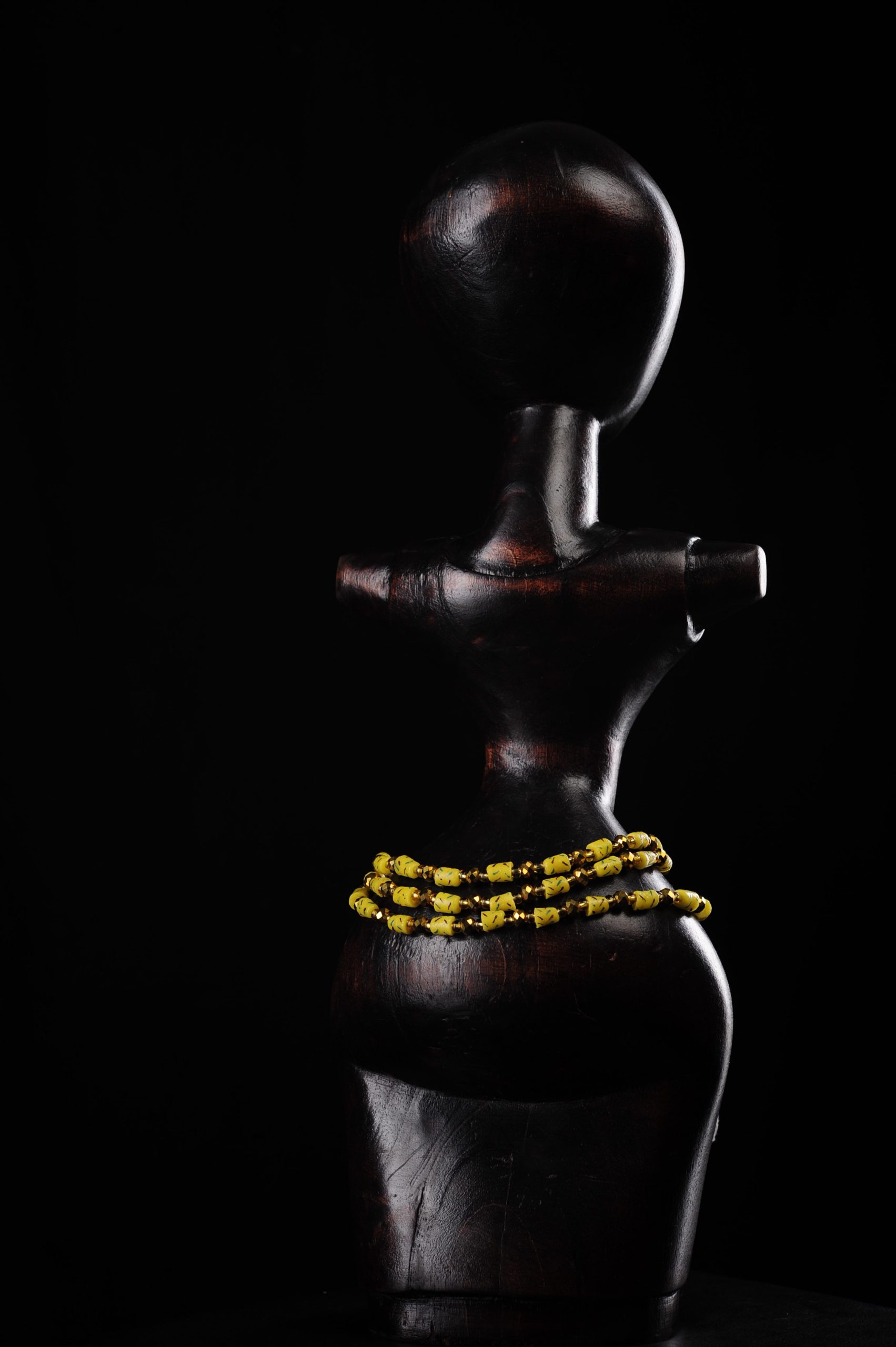
In many African cultures, and particularly in Ghana, adornment carries weight. Waist beads are not simply accessories worn around the body. They are markers of life’s transitions. They hold stories of girlhood, womanhood, desire, fertility, celebration, and personal agency. They can be gifted, inherited, hidden, revealed, or chosen deliberately as acts of self recognition.
For some women, waist beads signify identity and belonging. For others, they represent a rite of passage or a moment of becoming. They may mark motherhood, healing, or a return to oneself after loss. In quieter ways, they can also be acts of resistance. A reminder that the body belongs to the woman who inhabits it, not to societal expectations or external approval.
As I spent more time working with beads, listening to women, and reflecting on my own journey, something became clear to me. Art, entrepreneurship, and culture were never meant to exist as separate lanes in my life. They are one river. Each feeds the other. Each informs how I see, how I create, and how I serve.
Photography taught me how to see people deeply. It trained my eye to notice light, posture, and presence. It taught me patience and empathy. Beading brought me closer to the body itself. To touch, rhythm, repetition, and the meditative act of making something with intention. Together, they shaped my understanding of adornment as both visual language and emotional practice.
When I sit with a client to design a waist bead piece, the process mirrors how I approach portraiture. I listen first. I ask questions. I observe what is said and what is held back. Every choice, from color to spacing to length, becomes a response to the woman in front of me. Not who she is expected to be, but who she knows herself to be.
In the studio, behind a camera, my goal is the same. I am not interested in perfect poses or polished performances. I am interested in truth. In helping women see themselves beyond the noise of comparison, pressure, and expectation. I want them to recognize their softness and strength in the same breath.
Adornment, when practiced intentionally, becomes an act of self awareness. Waist beads respond to the body. They shift as the body changes. They remind us to pay attention. To honor growth, pause, expansion, and contraction without shame. In that sense, they are deeply personal and quietly powerful.
This is why Taltohma exists. Not simply as a brand, but as an extension of my artistic practice and lived experience. It is a space where culture, craft, and conversation meet. Where adornment is treated as a form of storytelling rather than decoration.
At its core, my work is about visibility. Helping women see themselves clearly and kindly. Whether through a photograph, a beaded strand, or a shared story, the intention remains constant. To create moments of recognition. To remind women of their beauty, complexity, and agency.
This remains my life’s work. To create art that listens. To build objects that carry meaning. To hold space for women to reconnect with themselves, their bodies, and their stories in ways that feel honest and grounding.
Adornment is not small. It is not superficial. It is a language. And when we learn to listen to it, it teaches us who we are.
Warmly,
Vera